
 DE
 FR
 EN
 ES

Did you know that we also have a traditional dance in Ibiza?
It still represents a very important part of our history and culture, far beyond the dances themselves.
We want to encourage you to discover it.
What is the Ball Pagés?
They are a series of traditional dances that come exclusively from the Pitiusas Islands, with their origins in rural society, since they were performed in country houses coinciding with collective tasks.
The origin is uncertain, although it is believed that they may be very old dances, and despite the marked Christian influence, a clear profane character is recognized for the dances in wells and fountains.
Due to this characteristic, it is believed that they could be related to an ancient water cult of pagan origin that later coincided with Christian festivities.
Currently, the dances are regularly performed by members of the “collas”, intergenerational groups whose objective is to keep alive this very important part of our culture, traditions and past.
Traditional Ibizan costumes
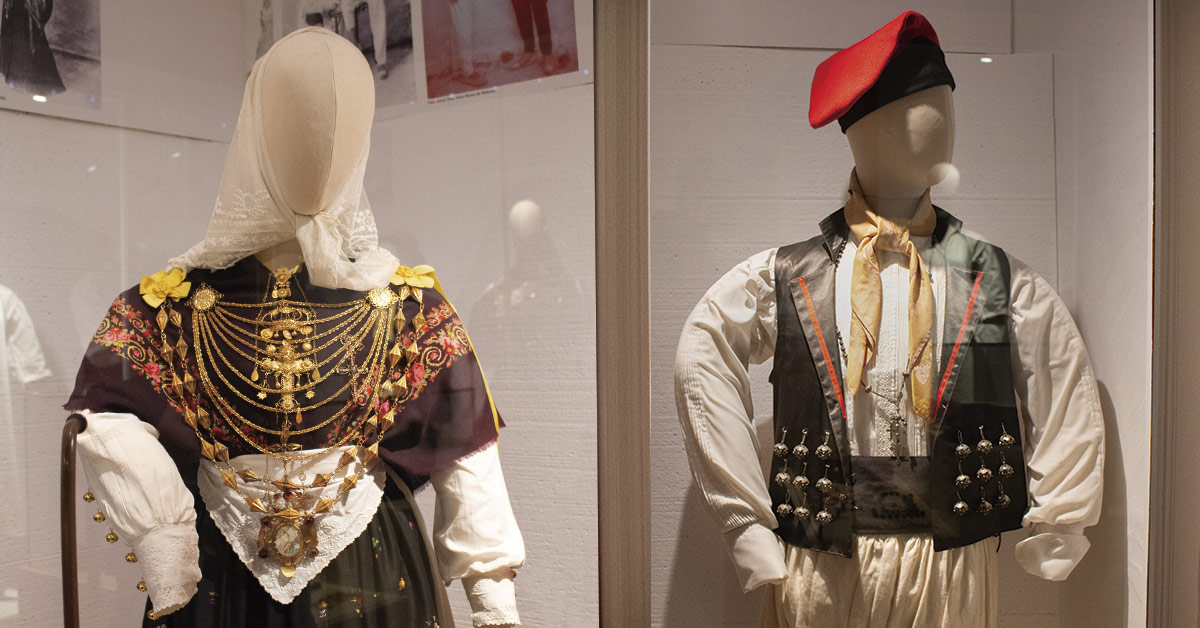
The clothing is also important, since it is totally unique and very special.
For women, the dresses are in colors like green, blue or brown, with up to 12 “rifacos” (skirts that go under the dress) to give it that characteristic flare that they have.
The sleeves are sewn separately onto a vest, and gold or coral jewellery hang from the chest, matching the rings, which together are called emprendada.
There are various types of dresses, such as the color one (the most common, and the one we have described), the bridal one, the well one, the gonella one (the oldest) or the Formentera one (much simpler).
Men are dressed in white trousers and shirt, a scarf around the neck and a red or black sash at the waist. If possible, a black vest with silver buttons was worn.
In both cases, esparto sandals are worn, of which there are also various types.
Classic Ball Pagés dances
There are 4 dances that were declared intangible cultural assets in 2012, although there are more, usually derived from these 4.
The common point between all of them is a clear differentiation between the role of men and women during their performance: the woman, in a submissive attitude, dances with her gaze fixed on the ground and her arms on her body making circles with very short steps, while the man jumps and raises his legs following her.
Despite small differences between towns and “collas”, in the 4 main dances they are performed in a certain way that allows them to be clearly differentiated:
- Sa curta: in ancient times it was the one that began and ended the “ballades” (gatherings to dance), and it was made by the older people. The steps and rhythm are slower, and the music is in ternary rhythm.
- Sa llarga: with a faster and more energetic rhythm, this dance is much more lively, since the dancer's gestures are more energetic and vigorous. The rhythm is quaternary.
- Sa filera: this dance is easy to recognize, since the same dancer asks two, three or even four women to dance in a row, performing the same figures as in the previous dances. The dancer approaches and moves away from each one of them.
- Ses nou rodades (or dotze rodades): this is the most ceremonial dance, and was formerly performed at weddings. The bride and groom began dancing softly, doing nine (or twelve) turns, and after the sixth turn the woman showed her rings, a gift from the groom. It ends with a llarga, which the rest of the dancers join in with.
In addition to these, in some areas dances such as “sa palmera” or “es molí” are performed, variations based on “sa llarga” or “sa filera”.
The instruments: the rhythm of a legacy
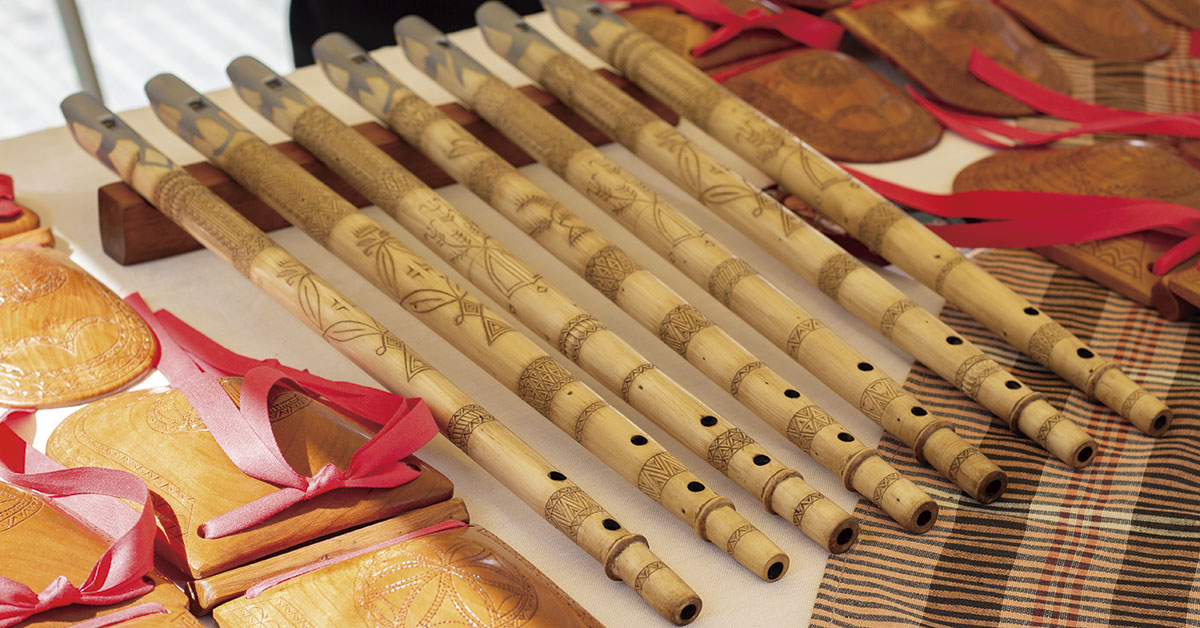
Music and instruments, of course, are very important in our traditional dances, and are still made entirely by hand by master craftsmen today.
The sonadors of the “collas” play the flute and the drum simultaneously, which mainly set the rhythm for all the dances. On some very important dates, and if one is available, the "espasí" is also played, a small metal sword that is played to the same rhythm as the drum.
The flute has a very particular design, as it only has 3 holes and the sound changes depending on the force applied when blowing; The drum, on the other hand, will be engraved with motifs of the dancer's choice.
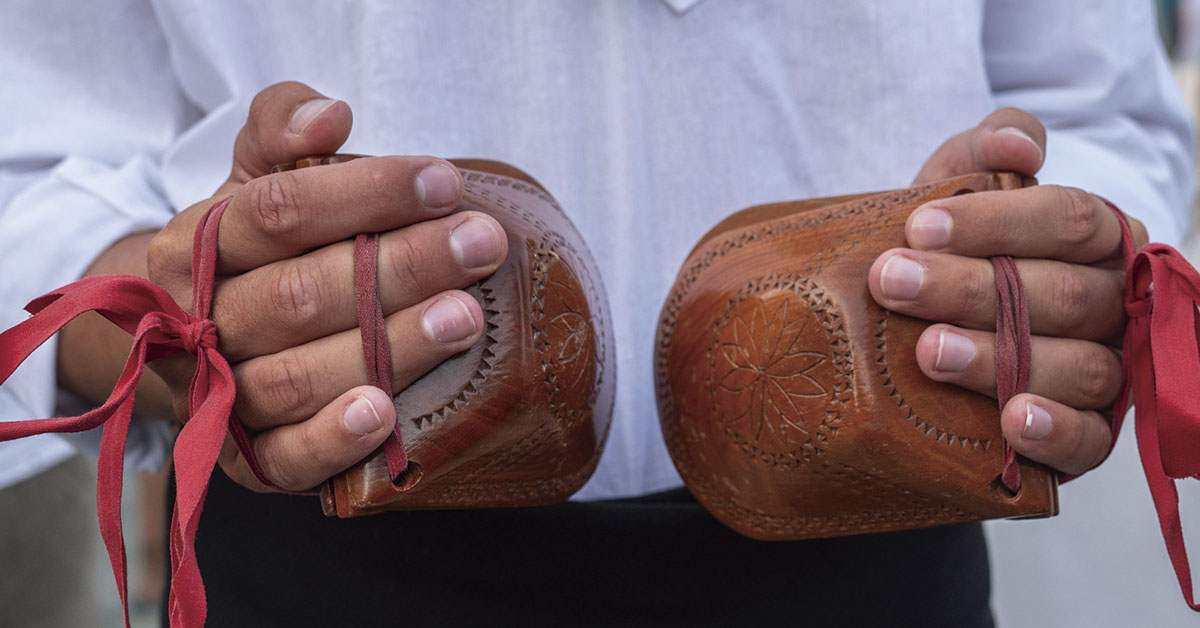
Our castanyoles (castanets) are some of the largest in the world and are made from juniper wood. The dancers use them to indicate which dancer they want to ask to dance with a tap, and then they make them sound while they dance.
There is no ball pagés without instruments!


